
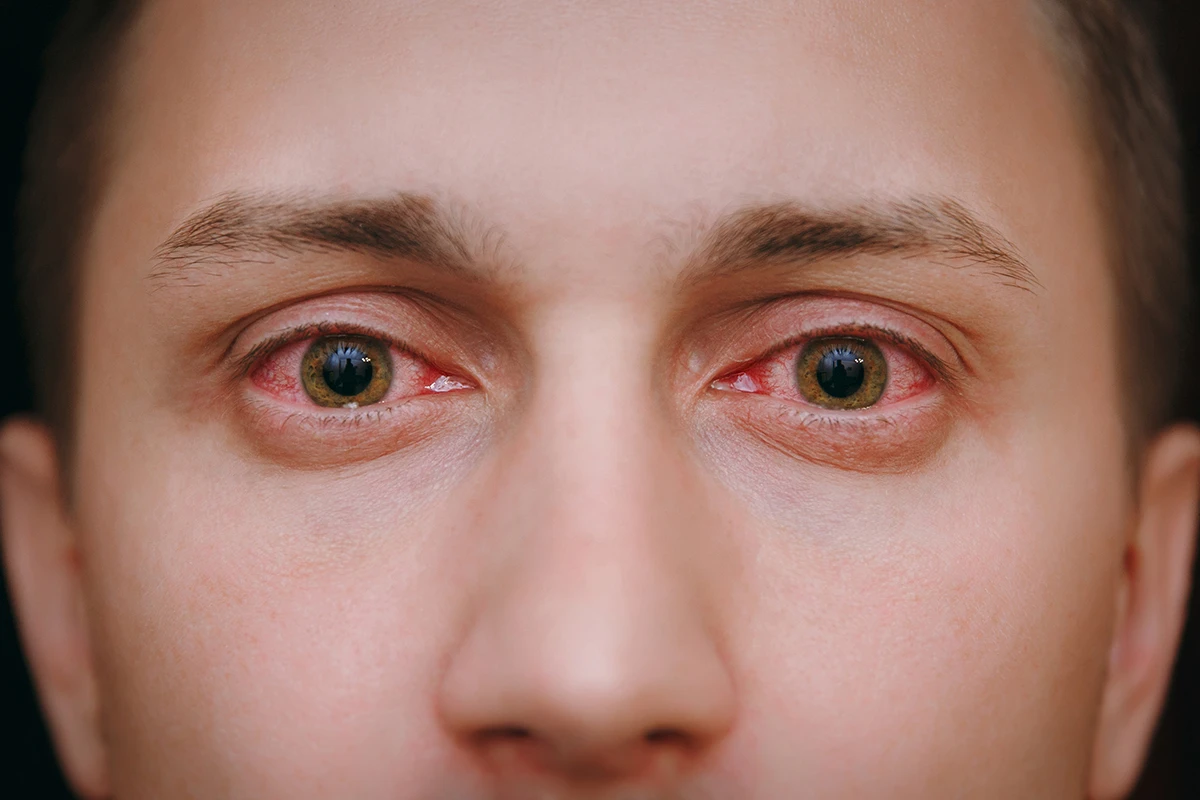
If your child has red, puffy eyes with discharge or you notice redness and irritation in your own eyes, it could be pink eye. During a comprehensive eye exam, our experienced optometrists in Sioux Falls can determine the type of conjunctivitis and recommend treatment to relieve discomfort and prevent it from spreading.
Keep reading to learn how to spot pink eye early, understand its causes, and protect your eyes and family.
What is pink eye?
Pink eye, or conjunctivitis, happens when the thin layer covering the white of the eye and the inner eyelids becomes inflamed. You might notice red, itchy, or watery eyes, and sometimes thick discharge that can make eyelids sticky. Some cases clear up on their own, while others need treatment to avoid complications or the spread of infection.
How do you get pink eye?
Pink eye can develop from several sources:
1. Viral conjunctivitis
Viruses, like those that cause the common cold, can infect the eyes, causing redness, watering, and irritation. Viral pink eye often resolves without medication but spreads easily through touch or close contact.¹
2. Bacterial conjunctivitis
Bacteria can trigger redness, swelling, and thick yellow or green discharge. This type spreads quickly when eye secretions touch another person or shared items.
3. Allergic conjunctivitis
Allergens such as pollen, dust, or pet dander can make your eyes itchy, watery, and red. Allergic pink eye doesn’t spread between people.¹
Signs of pink eye
Look for these symptoms to spot pink eye early¹:
- Redness in one or both eyes
- Itching, burning, or scratchy sensations
- Grittiness in the eyes
- Excessive tearing
- Watery or sticky discharge
- Crusty eyelids, especially in the morning
- Sensitivity to light
Early recognition can help speed up recovery and reduce the chance of passing pink eye to others.
How long does pink eye last?
The duration depends on the cause of pink eye:
- Viral pink eye: Usually resolves in one to two weeks.²
- Bacterial pink eye: Improves within two to five days with treatment, but full recovery can take up to two weeks.²
- Allergic pink eye: Continues as long as you are exposed to the trigger.
Pink eye treatment
If symptoms worsen or persist for more than a day, it’s important to see an eye doctor. Our expert team can evaluate your eyes, determine the type of conjunctivitis, and recommend the right treatment.
Treatment may include:
- Viral: Artificial tears and cold compresses to ease discomfort
- Bacterial: Prescription antibiotic drops or ointments to clear infection
- Allergic: Antihistamine or anti-inflammatory eye drops and avoiding triggers.
If your child is showing symptoms of pink eye, a pediatric eye doctor can prevent complications and reduce the spread of infection.
Preventing pink eye
You can protect your eyes and prevent spreading pink eye to others by³:
- Washing your hands for at least 20 seconds regularly
- Avoiding rubbing or touching your eyes
- Not sharing eye drops, makeup, towels, or pillows
- Washing bedding and towels with hot water and detergent
- Gently removing eye discharge with a clean, damp cloth
- Switching to glasses until your eyes heal
- Using a fresh pair of contact lenses and a clean case after recovery to prevent reinfection
Maintain healthy, comfortable eyes
Pink eye can interrupt your daily routine, but the right care helps you recover faster and keeps your eyes healthy. Our experts can diagnose pink eye, suggest effective treatment, and provide tips to protect your vision.
Schedule an appointment today to relieve irritation, prevent complications, and protect your eyes and your family’s vision.
References:
- Pink eye (conjunctivitis). mayoclinic.org
- Treatment for pink eye. nei.nih.gov
- How to prevent pink eye. cdc.gov